







What Makes a Solar Air Conditioner a Cost-Effective Choice for Cooling and Heating?
Release time: 2026-09-04
Table of Contents
Air conditioning can be one of the larger electricity expenses for homes, offices, shops, and other buildings, especially in places where cooling is needed for long hours. For buyers looking to control these running costs, the question is not only how well an air conditioner cools or heats a room, but also how much energy it needs to do the job.
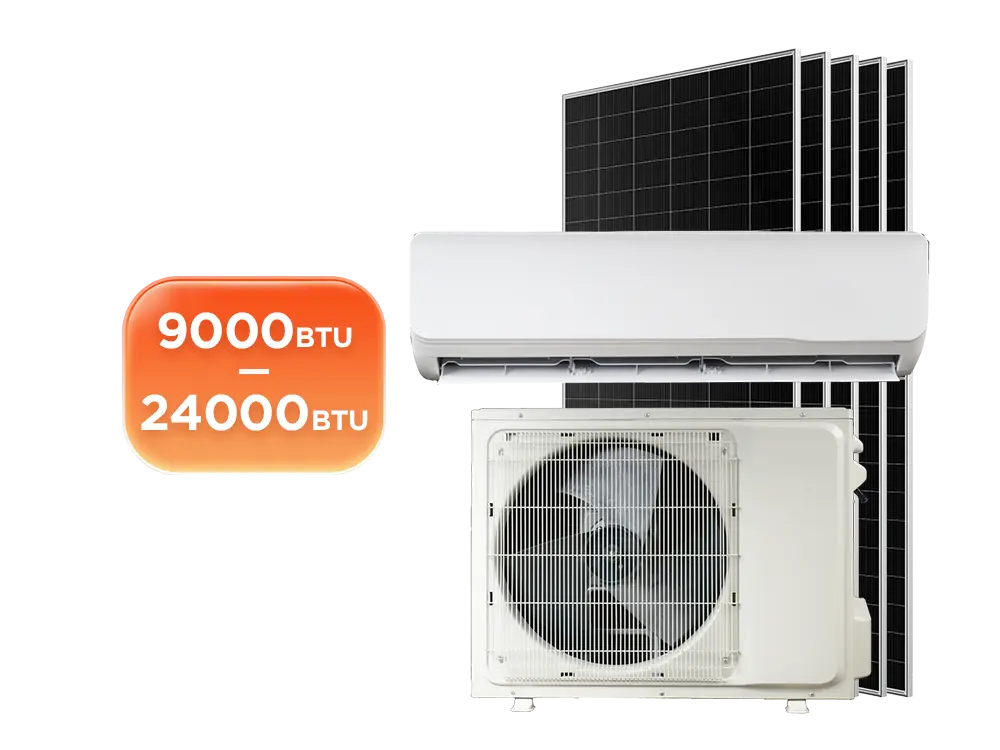
The REFRIA Hybrid Solar Air Conditioner from Solvic Power is designed with this concern in mind. Available in capacities from 9,000 to 24,000 BTU, it uses solar direct-drive technology to operate directly from solar panels without requiring batteries or a separate inverter. With efficiency of up to SEER 36 and both cooling and heating functions, it offers a practical option for users who want to make greater use of solar energy while keeping air conditioning costs under control.
How Can a Solar Air Conditioner Reduce Electricity Costs?
The biggest difference between a conventional air conditioner and a solar air conditioner is where the operating energy comes from.
A standard air conditioner relies mainly on electricity supplied by the grid. When the unit runs for several hours a day, particularly during hot weather, electricity consumption can add up quickly.
A solar air conditioner can use electricity generated by solar panels to power the unit. This means that when sunlight is available, part of the energy normally purchased from the grid can instead come from solar power.
For buildings with high daytime cooling demand, this can make particular sense. Offices, stores, workshops, and homes may need the most cooling during the same part of the day when solar panels are producing energy.
The actual savings will depend on factors such as local electricity prices, sunlight conditions, operating hours, and installation design. However, using solar power directly can reduce the amount of grid electricity required for air conditioning.
What Makes REFRIA’s Solar Direct-Drive Design Different?
One of the main features of the REFRIA system is its solar direct-drive technology.
In many solar power setups, electricity from solar panels passes through additional equipment such as batteries or inverters before reaching the final load. These components can be useful when energy needs to be stored or converted for other equipment, but they also add to the overall system.
REFRIA takes a simpler approach. The air conditioner is designed to operate directly from solar panels, without a battery or separate inverter.
For buyers who mainly want to use solar energy during daylight hours, this can make the system easier to understand and potentially simpler to install. It also means there are fewer additional components to consider when planning the system.
Why Is SEER Important When Choosing a Solar Air Conditioner?
Solar availability is only one part of the cost equation. The efficiency of the air conditioner itself also has a direct effect on energy consumption.
A system with higher efficiency can provide the required cooling or heating while using less energy. This becomes more important when an air conditioner is used for many hours every day.
The REFRIA Hybrid Solar Air Conditioner can reach SEER 36. For buyers comparing different models, this provides an important point of reference when considering how efficiently the equipment can turn available energy into cooling performance.
A high-efficiency unit can also make better use of the solar power available during the day. If less energy is needed to provide the same level of cooling, the available solar generation can go further.
Can One Solar Air Conditioner Handle Both Cooling and Heating?
For many users, having both functions in one system can improve the value of the equipment.
During summer, the air conditioner can provide cooling when indoor temperatures rise. During colder periods, the heating function can be used to maintain a comfortable indoor environment.
This is useful for buildings where air conditioning is needed throughout different seasons. Instead of installing separate equipment for cooling and heating, one system can handle both requirements.
For commercial buyers, this can also make equipment planning more straightforward, particularly when the same buildings are used throughout the year.
How Should You Choose the Right BTU Capacity?
Choosing the right capacity is important if the goal is to balance comfort and energy consumption.
A unit that is too small may struggle to maintain the desired temperature, while an unnecessarily large unit can increase the initial purchase cost without providing a clear benefit.
The REFRIA range covers 9,000 to 24,000 BTU, giving buyers several capacity options.
| Product Feature | REFRIA Hybrid Solar Air Conditioner |
| Capacity | 9,000–24,000 BTU |
| Functions | Cooling & Heating |
| Solar Technology | Solar Direct-Drive |
| Power Source | Solar Panels |
| Battery Required | No |
| Separate Inverter Required | No |
| Maximum Efficiency | Up to SEER 36 |
| Minimum Order | 20 pieces |
| Stock Time | 30 days |
| Price | US$450–660 / piece |
The right capacity depends on the room or building size, insulation, local climate, window area, occupancy, and other heat-load factors. Buyers should consider these conditions rather than choosing a model based on BTU alone.
Where Can a Solar-Powered Air Conditioner Be Used?
A solar-powered air conditioner can be considered for many locations where there is sufficient sunlight and a need for daytime temperature control.
Homes
Residential buildings in sunny areas can use solar energy to support daytime air conditioning. This is particularly relevant for households that use their air conditioner frequently during daylight hours.
Offices and Retail Spaces
Offices and stores often operate during the daytime, when solar panels can be producing electricity. This makes them a natural application for solar-powered cooling.
Workshops
Workshops can become uncomfortable during hot weather, particularly when machinery or other equipment adds heat to the space. Solar-powered air conditioning can help manage indoor temperatures while reducing reliance on grid electricity.
Remote Locations
Some remote sites have limited access to grid electricity. A direct solar air conditioning system can be worth considering in these situations because the equipment does not depend on a battery or separate inverter for its solar-powered operation.
The suitability of the system will still depend on the location, solar conditions, building requirements, and expected operating pattern.
What Should You Check Before Buying?
Choosing a solar air conditioner involves more than checking the price. Several factors can affect whether the system is a good fit for a particular application.
Solar conditions: Check how much sunlight is available at the installation site and whether the solar panels can be positioned appropriately.
Required capacity: Estimate the cooling and heating load of the space before selecting a BTU rating.
Energy efficiency: Compare efficiency ratings such as SEER when looking at different models.
Operating hours: A system used mainly during daylight hours may be able to make particularly good use of direct solar power.
Installation conditions: Consider available roof or installation space, panel positioning, electrical requirements, and the location of the air conditioner.
Purchase requirements: Distributors and commercial buyers should also consider minimum order quantities, supply time, and unit pricing when planning a purchase.
For the REFRIA model, the minimum order is 20 pieces, with a stated stock time of 30 days.
Is a Solar Air Conditioner Really More Cost-Effective?
The answer depends on how and where the system is used.
A solar air conditioning system can be more attractive when several conditions come together: good solar exposure, high daytime cooling demand, relatively high electricity prices, and long operating hours.
The initial equipment cost is only one part of the calculation. Buyers should also consider how much electricity the system may consume over its operating life and how much of that demand can be covered by solar power.
For example, a building that runs air conditioning for many hours during sunny daytime periods may have a better opportunity to benefit from direct solar operation than a building that mainly uses air conditioning at night.
This is why the potential cost benefit should be evaluated based on the actual application rather than assuming that every solar air conditioning installation will produce the same savings.
FAQ About Solar Air Conditioners
1. Does the REFRIA Solar Air Conditioner need a battery?
No. The REFRIA system uses solar direct-drive technology and is designed to operate directly from solar panels without a battery.
2. Does it need a separate inverter?
No separate inverter is required for its solar direct-drive operation.
3. What capacities are available?
The available capacity range is 9,000–24,000 BTU.
4. Can it provide both cooling and heating?
Yes. The system is designed for both cooling and heating, making it suitable for use across different seasons.
5. What is the maximum SEER rating?
The system can reach an efficiency of up to SEER 36.
6. Is it suitable for commercial applications?
It can be considered for offices, retail spaces, workshops, and other commercial buildings, particularly where daytime cooling demand is significant.
7. Will it work the same way in every climate?
Not necessarily. Solar availability, outdoor temperature, building insulation, operating hours, and other local conditions can affect performance and energy savings. These factors should be considered when planning an installation.
A Practical Option for Lower-Cost Air Conditioning
For buyers trying to reduce the electricity costs associated with cooling and heating, solar air conditioning offers an approach that is worth considering. The key is not simply adding solar panels to an existing air conditioner, but choosing equipment designed to make practical use of solar power.
The REFRIA Hybrid Solar Air Conditioner combines direct solar operation, cooling and heating functions, a 9,000–24,000 BTU capacity range, and efficiency of up to SEER 36. Because it can operate directly from solar panels without a battery or separate inverter, it can also simplify the overall equipment setup for suitable applications.
For homeowners, distributors, contractors, and commercial buyers, the best choice will depend on the required capacity, local sunlight, operating schedule, installation conditions, and expected energy costs.
For applications with strong daytime solar availability and regular air conditioning demand, this type of solar air conditioner can provide a practical way to use more solar energy while reducing dependence on grid electricity.
Solvic Power provides the REFRIA Hybrid Solar Air Conditioner for buyers looking for a combination of solar direct-drive operation, efficient temperature control, and flexible capacity options.